Back to Top

Category: Planning, policy and legislation

federal, state and local plans and policy; legislation and regulations; planning guidelines; tenure administration; land use

Adelaide, Brisbane and Hobart Statements

The Brisbane Conference Statement, arising from the 2024 Parks and Leisure Australia Annual Conference, builds on the foundation from the 2023 International Congress’s Adelaide Statement. The Statement continues to pursue the six Pledges in the Adelaide Statement:

  •  Promote Sustainability
  •  Advocate for Equity
  •  Foster Collaboration
  •  Embrace Innovation
  •  Champion Health and Wellbeing
  •  Community Engagement.

The Hobart Statement was endorsed by the November 2025 Annual Conference, with the same six themes re-endorsed. Further information  is available on the website of our partner Parks and Leisure Australia.


Review Status: Pending

Victorian Protected Areas Council

Victoria’s national parks and other “protected areas” on public land form a world-class network of areas encompassing representative examples of many of the State’s diverse ecosystems and much of the biodiversity they contain. They safeguard many of the State’s flora and fauna species, preserve sites and features of indigenous and historical heritage, provide vital environmental services like carbon storage and water catchments, and offer nature-based recreation that supports local and regional visitor economies. They are valued as a living cultural landscape by Traditional Owners, with many now jointly managed.

“Protected area” is a clearly defined geographical space recognised, dedicated and managed through legal means to achieve the long-term conservation of nature with associated ecosystem services and cultural values (adapted from International Union for Conservation of Nature, 2008). In Victoria protected areas on public land include: national, state and wilderness parks; marine national parks and sanctuaries; conservation parks; nature conservation, nature and bushland reserves; some natural features reserves; and reference and remote & natural areas.

Despite their significance, Victoria’s public land protected areas face ongoing management and resourcing challenges. Marking the 50th anniversary of the National Parks Act (1975), a group of retired protected area managers identified the need for a professional body to offer independent advice and advocate for improved resourcing and management of Victoria’s public land protected areas. They also identified the need for a professional body to connect and represent current and former protected area management staff and facilitate opportunities for former staff to stay connected and make ongoing contributions to public land protected area management.

On 28 October 2025, the group incorporated as the Victorian Protected Areas Council Inc. and approved its Constitution and Terms of Reference. Click here for the Terms of Reference.

The purpose of the new body is “To advocate for:

  • The critical role of protected areas in conserving and protecting natural, cultural and visitor values and ecosystem services;
  • Improved effectiveness of public land protected area management in Victoria; and
  • Strategic additions to Victoria’s public land protected area network to ensure comprehensive, connected and adequate representation of the State’s natural areas, diverse ecosystems and biodiversity.

“To be a professional association for Victorian public land protected area managers to:

  • Support the professional development of current public land protected area professionals; and
  • Provide a forum for former public land protected area professionals to stay connected and continue contributing to protected area management in Victoria.”

For more information, refer to the Council’s website https://victorianprotectedareascouncil.org/.


Review Status: Pending

Open Space Planning in SEQ – 1994-2021

More than 25 years after the creation of a regional open space network was recommended in the SEQ 2001 Regional Plan, South East Queensland does not have a regional park system or any coordinated network of recreational open space worth the name. The narrative of what-might-have-been is a story of opportunities lost, at least three times over.


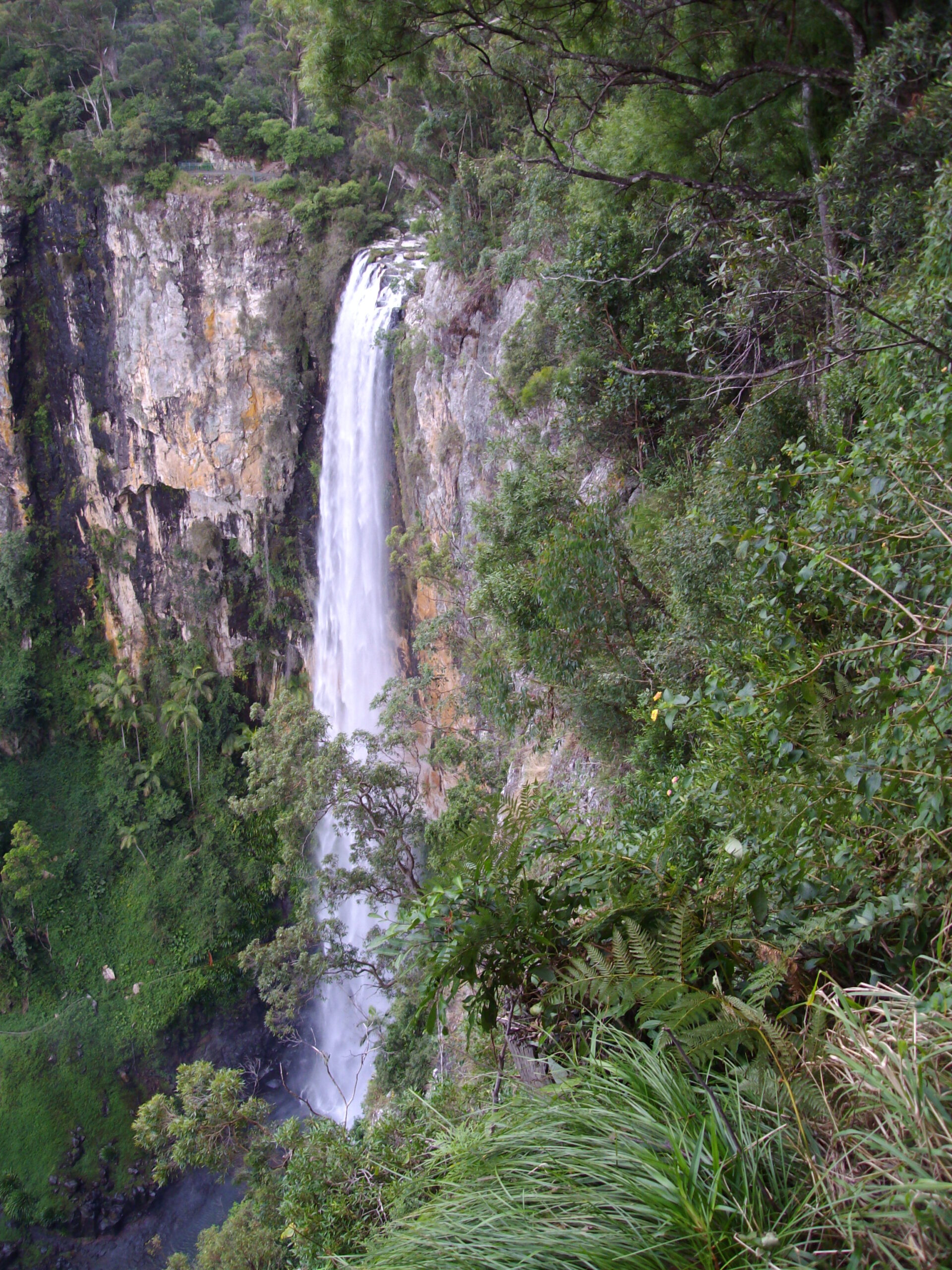
Purlingbrook Falls adjacent to the rainforest purchased under ROSS in 1994 – G. Edwards

Continue Reading

Review Status: Pending

Parkland surrendered at time of subdivision

In the late 1990s, the planning profession in Australia became enthusiastic about performance-based planning, by which applicants for development were supposed to justify their projects in terms of satisfaction of idealised principles, as distinct from the prescriptive planning by which applicants hitherto were required to satisfy detailed or at least specified standards. Whether by design or as an unintended consequence, this shift has been beneficial to the property industry as it placed local government officers and public servants on the defensive in attempting to condition developments so that ample public space is brought into public ownership to cater for the needs of new residents.

Practice between local governments and between states has long been disparate. In Victoria, the legislation specified a minimum charge and some local governments used the provision to extract large tracts of open space. For example, the  Shire of Sherbrooke negotiated sometimes as much as 90% open space contribution, in steep or fire-prone localities of the Dandenong Ranges (such as became the Selby Bushland Reserve). By contrast, in Queensland prior to 1997, legislation specified a maximum statutory charge, reflecting the state’s pro-development ethos.

In developing localities, it’s vital that sufficiently large corridors of land are reserved for public purposes and it’s particularly important that floodplains, wetlands and ridgelines be reserved from incompatible development and (in the case of watercourses) to allow space for soft engineering works to manage stormwater.

The Land Planning Branch of the Queensland Department of Natural Resources sought to draft some guidelines for planning officers in local governments and departmental staff in dealing with development applications. The intention was to provide an authoritative benchmark to fortify officers in negotiations with developers and even perhaps in court. Jeremy Addison, a qualified planner and an officer of the Department, produced a draft working paper that was not considered finalised and was not published by the Department. It is replete with references to the statutory planning and land tenure legislation in operation in Queensland in the late 1990s-early 2000s, after the passage of the (now superseded) Integrated Planning Act 1997. It is included here because there are few known similar guidelines in public circulation and so the paper has contemporary value beyond historical interest. Its shortcomings should not be attributed to Mr Addison.


The “Parkland Surrender” paper addresses how much land should be offered up for public purposes in new subdivisions like this site of a proposed estate at Caboolture West, South East Queensland.


Surrender by developers is not the only method and perhaps not the most effective method of securing public open space. Melbourne’s metropolitan parks system, including Petty’s demonstration orchard at Templestowe, was funded by a general “metropolitan improvement” rate.


Some notes

In Queensland, performance-based planning was introduced in the Integrated Planning Act 1997, modelled on the Resource Management Act of New Zealand, although without any provisions for allocating (privatising) state land or mineral assets.

Previous legislation had specified that land taken at subdivision was to be surrendered to the Crown and then (usually) reserved for public purposes with the local government being invited to serve as trustee. Local governments objected to this safety net provision which provided a brake against disposal of the parkland, because (they argued) it was easier to rationalise their park holdings and sell isolated pockets if held as freehold. Yes, small pockets of land are inherently more expensive to maintain than a comparable acreage added to a large district park, but they are serving a different clientele.

It has been argued that land surrendered at subdivision is a tax upon the future residents, so only land of benefit to them should be taken; in other words government has no right to levy developers on behalf of users in a regional or or remote catchment. However, subdivision is a privilege, not a right, and a district- or regional-scale surrender is appropriate, so long as the levy is for a public interest purpose and is permitted by the legislation. (The precise wording of the legislation is critical).

Invitation to planners and landscape designers

Critical feedback is invited from any person with survey or planning expertise and who would like to collaborate with PaRC in building the working paper Parkland Surrender at Time of Subdivision into a modern guideline applicable across Australia, New Zealand and Pacific Islands. Please contact secretary @ parcaustralia.com.au. PaRC would also like to know of other comparable current or historical guidelines that can be re-published here.

UPDATE 2024

Eminent planner Marcus Spiller has drawn attention to an Occasional Paper on this subject, Public Open Space Contributions in Victoria.


Review Status: Pending

Open Space Contributions in Victoria

Renowned planner Dr Marcus Spiller, Principal of the eminent planning and economics firm SGS, has granted approval to upload some signature documents to PaRC.


In 2024, Dr Spiller and colleague Jo Noesgaard  published an Occasional Paper proposing a preferred approach to the calculation of public open space (POS) development
contributions under Victorian legislation. Councils rely heavily on development contributions under Cl53.01 of the Victoria Planning Provisions to acquire and develop public open space. However, there is little formal guidance from the State Government as to how the rates which are potentially enshrined in Cl53.01 might be calculated and strategically justified.

Business as usual arrangements, under which most of metropolitan Melbourne is covered by contribution rates of 5 per cent or less of site value, would see a rapid
deterioration of access to POS given the projected strong growth of the city. As councils go about reviewing their Cl53.01 rates, it is important that they have regard to four key principles.

These include:

  • treating the municipality as one planning unit;
  • ensuring that POS supply is adequate in quantum, accessibility, and quality;
  • applying contribution obligations equitably regardless of the timing of development; and
    applying contributions to all land use types.

This timely and authoritative report complements an earlier post on PaRC Parkland surrender at time of subdivision featuring a draft guideline by Queenslander Jeremy Addision.

Review Status: Pending

Valuing Good Urban Design


Renowned Australian planner Marcus Spiller, Principal of the eminent planning and economics firm SGS, has granted approval to upload some signature documents to PaRC.

A consultancy with Gold Coast City Council resulted in the report Valuing Good Urban Design on the Gold Coast, which includes a substantial account of methodology and the justification for urban design:


Review Status: Pending

Regional Planning and Regional Coordination – Qld, 1973

This is an important report, dated about 1973, explaining the intentions of the benchmark 1971 legislation the State and Regional Planning and Development, Public Works Organization and Environmental Control Act 1971-1973.

it is an important statement of the views of the Queensland Government of the day about regional land use planning, development planning, consultation and coordination. Published by the Office of the Coordinator-General.

Review Status: Pending

MidCoast Walking Cycling and Trail based Activity Strategy

MidCoast Walking Cycling and Trail based Activity Strategy


This strategy is part of the MidCoast Parks & Recreation Planning Portfolio, a group of 9 strategies and plans for the management of the 827 parks and reserves, and the activities that take place in them, on the MidCoast of NSW.


This strategy sets out a 10 year plan for the management, enhancement and addition of paths and trails throughout our urban, coastal and mountain reserves.

Review Status:

MidCoast Playspace design and maintenance guidelines

Playspace design and maintenance guidelines


These guidelines have been developed by play planners and designers, as well as council operational staff who are experienced with play design and maintenance.

Review Status:

Queensland Government Statewide Outdoor Recreation Framework

In 2014 the Queensland Government issued a policy statement endorsed by 17 public authorities, the Local Government Association  and the peak body for outdoor recreation, the Queensland Outdoor Recreation Federation. Titled the Queensland Government Statewide Outdoor Recreation Framework: A Collaborative and Coordinated Approach to Outdoor Recreation in Queensland, to achieve endorsement from such a large number of authorities was no mean feat. The statement was intended to replace an earlier one Queensland Outdoor Recreation Strategic Framework 2009—2014 which had run its course.

The Framework was designed to protect and improve access to outdoor recreation places and spaces; promote outdoor recreation opportunities and participation; and enhance the sustainability and capacity of the outdoor recreation sector.

Yet despite the fact that there is nothing political in the statement, after the government was replaced by one of the opposite partisan denomination the following year, the Framework disappeared from the Department’s public website and public servants were instructed by the incoming government to work on something different.

It is not difficult to be quite angry at the waste of human capital when the work of representatives of 19 different entities is discarded in this manner. Anyone who has worked in an interdepartmental role will understand how time-consuming it is to gain endorsement of their agency to a multilateral policy position.

It gets worse. By law, all Queensland publishers, including government departments, commercial organisations, clubs, churches, societies and private individuals, are required by law to deposit one copy of their publications with State Library of Queensland (SLQ). The document appears in the SLQ catalogue, but clicking on the hotlink within the catalogue record yields the following message:

Oops, page does not exist!

Fortunately, the Queensland Outdoor Recreation Federation (now Outdoors Queensland) salvaged a copy and PaRC is pleased to re-present it here.

Researchers in this field should also search the PaRC Document Library which includes a number of reports on the subject, including the Outdoor Recreation Demand Studies of 1998 and 2007.

Review Status: Pending