Back to Top

Hobbies and leisure pursuits accommodated in Australian parks – 1994 view

This narrative has been edited from a draft written for an international audience in October 1994 by Peter Nicholls, Trustee of the AIPR Trust Fund-Education. The term “parks” refers to both urban and non-urban parks.

Background

Australia is approximately the same size as the United States of America but has a population of only around 17 million people. Yet it is one of the world’s most urbanised communities, with the large majority of its peoples living on the east coast and approximately half of the population living in just two cities – Sydney and Melbourne. Also, it has been traditional for the typical Australian family to live in a bungalow style of home with a front and back area of private open space. It is however increasingly common for people to prefer high density or medium density housing.

Australians have an image of being sun-bronzed and weathered people who prefer the ‘great outdoors’. The impression that kangaroos and koalas are commonplace sights in metropolitan areas of Australia is still widely held among people of the northern hemisphere. While it may be a fact that Australians are, in reality, highly urbanised and as highly diverse in their interests as the people of other nations, they do have an innate affiliation with the countryside. But it is a harsh and often unforgiving countryside (known to Australians as ‘the bush’ or the more remote areas ‘the outback’). Yet it is a countryside of unimaginable beauty, which draws people from all walks of life, Australians and overseas visitors alike.

These facts are important background knowledge to understand the Australian culture in relation to its use of parks for recreation and leisure pursuits.

Urban parks

The earliest settlers in Australia (after arrival of Indigenous peoples perhaps 60,000 years ago) were from Britain and Europe. They found great difficulty in coming to terms with the fact of Australia’s general dry and harsh climate. This difficulty was reflected in the fact that the settlers preferred to create something of the soft lush greenery of their homelands in their development of gardens and local public open space. The typical urban park has therefore traditionally been designed along the lines of the English or European park, with large areas of manicured turf, bordered by trees and flower beds. The American parks specialist, Seymour Gold, on a trip to one of Australia’s more congenial cities, Adelaide, was heard to remark that it was the ‘mowing capital of the world’.

Whereas the main uses of the traditional ‘English-style’ park have been sitting and contemplation, the more modern park better reflects the Australian culture both in its design and its usage. Australians are now coming to recognise their country for its own special form of beauty. This is increasingly evident in parks design with greater use of brown areas, drought resistant turfs and native flora.

The ways in which urban parks are used have diversified in parallel with a growing Australian appreciation of the wide range of available recreation opportunities. Organisations such as Life. Be In It (a highly successful Australia-wide program aimed at promoting the benefits of fitness and increased activity through a ‘soft sell’ approach) has done much to bring people out to their parks for unstructured family activities such as kite flying, ball games, walking, cycling, jogging and swimming. In particular, the phenomenon of seeing hundreds of people participating in ‘Life Games’ did much to give people a new appreciation of the joys of visiting their local park.

The use of parks for public festivals has also grown in popularity. Ethnic festivals, food and drink festivals, Australian adaptations of European festivals such as the German Scheutzenfest in Adelaide, open air orchestral concerts, Christmas Carols by Candlelight evenings and free public rock music concerts are just a few examples of how urban parks are being used throughout Australia.

A modern trend in park design has been the development of linear parks. These generally follow natural corridors such as rivers or creeks, or where the opportunity arises, disused railway reserves. Linear parks suit modern leisure trends in which people look to walking, cycling, jogging, roller skating and the like as enjoyable forms of activity. Linear parks provide a means of getting from one place to another, variety in surroundings and, where they follow a natural corridor, they stimulate the modern interest in understanding and enhancing the natural environment.

Linear parks are succeeding in bringing Australians out of their houses and private gardens and encouraging them to better know and understand their neighbourhood. Creeks are again becoming status symbols instead of eyesores to be concreted and filled. Bird watching and fishing along local waterways is an emerging neighbourhood activity. Indeed it is true to say that linear parks are proving to be valuable media for community development as people who are out walking seem far more inclined to say ‘hullo’ to each other.

Regrettably, modern trends are also resulting in an increasing public perception of urban parks as being places of danger because of a perceived increase in anti-social activities taking place in parks. Public toilets in parks are avoided (and often closed) for fear of confronting antisocial activities. Fear of muggings, stabbings or bashings, excessive drinking and drug-taking are other negative reputations of urban parks which cause the general population to avoid them, particularly after dark. There is general agreement among parks managers that these fears are more a matter of perception than fact but the impact on usage is strong.

Non-urban parks

Non-urban parks are managed by a variety of agencies, most of which are in the public sector. They include the national parks and wildlife service, woods and forests agencies, water management agencies, coastal management agencies, local councils and agencies generally responsible for unallotted public lands (known as Crown land). There are also large tracts of public land – usually in the more remote regions – leased for private farming and pastoralism but still sometimes open to public access, subject to conditions. (Conditions differ between the various state-based regimes).

Most Australians have a yearning to get away from the pressures of the city life from time to time and enjoy the attractions of the Australian countryside. These getaways vary in length and intensity from the popular family drive in the car and picnic in the nearby countryside to longer and more hazardous treks into the outback.

The distances that people travel into the countryside varies but is mostly limited to the need to be home before dark. Throughout hinterlands within 1-3 hours driving time of metropolitan areas, picnic areas are abundant. One study of visitor patterns at a popular rural picnic area showed that people tended to arrive from about 11 am and the area was constantly busy until about 3 pm. By 3.30 pm the area was all but deserted.

A characteristic of Australians is that, while they enjoy the sensation of ‘roughing it in the bush’ they prefer to do so within sight of the family car. Thus problems arise in creating the illusion of a rough bush setting while providing nearby car parking. This conflict also increases environmental damage as recreationists strive to enjoy the comforts of the car with a rustic experience.

The recreation opportunities sought by the ‘day tripper’ are many and varied with the most popular being simply to drive for pleasure, using picnic areas to stop for lunch and to allow the family to get some fresh air and exercise. Short walking trails (up to an hour’s duration) are popular and opportunities to see native wildlife in safe surroundings are a strong attraction. The ubiquitous shop selling ice cream and confectionery is further evidence of the popularity of parks which combine an outdoors experience with the comforts of home.

Parks near metropolitan areas often provide a range of urban recreation facilities such as tennis courts, playground equipment, barbecues, shelter sheds, sporting ovals and seating. There is an increasing tendency to charge an entry fee into these areas – a practice which is better accepted by the public if they believe that the money collected is being put directly back into the development of that area rather than into a general revenue fund.

Travel to a rural site where it is necessary to stay overnight or longer is also highly popular. Traditionally, Australian park management agencies have provided somewhat crude camping facilities in the belief that this is what the typical Australian camper is seeking. Agencies are now beginning to acknowledge a huge and growing market for rural experiences in good quality camping and caravanning sites and that users are prepared to pay for quality.

In more remote parks, the public seeks natural recreation experiences such as bushwalking, fishing, boating, sightseeing, bird watching, camping, viewing wildlife, nature studies and photography or painting. There is also a high demand for activities which are, to a greater or lesser degree, incompatible with the natural environment. These include trail horse-riding, car rallies, trailbike riding, power boating and offroad vehicle activities.

These latter activities highlight the fact that while the Australian countryside has a rugged image that people from other countries often perceive as being harsh and unforgiving, some natural landscapes such as water frontages are quite fragile. Funding adequate to allow park managers to control (as unobtrusively as possible and notably through park design) for recreational and leisure use is essential.

National parks are of course intended to preserve and enhance the worthier natural areas of a country and are therefore highly appropriate destinations for the growing world demands for eco-tourism opportunities. In fact by world standards Australia is slow to capture its rightful share of the ecotourism market. Some specific localities are capturing the interest of overseas visitors, such as the Great Barrier Reef off the north Queensland coast and Ayers Rock (Uluru National Park) in Central Australia. Kakadu National Park of Crocodile Dundee fame is another area gaining overseas popularity. However the potential of so many other magnificent areas of Australia’s unique natural environment are still Australia’s best kept secrets in the world ecotourism market.

Conclusion

Parks – urban and non-urban – symbolise the Australian love of the outdoors. To date they have been developed in ways that have tended to reflect the perceived traditional purpose of parks as places to look at and meditate in. It is pleasing to see that modern parks managers are becoming increasingly aware of the fact that there is a huge untapped potential to develop ‘people purpose parks’ which not only cater for outdoor recreation needs but truly reflect Australian cultural values and leisure demands.

Review Status: Pending

Multiple Use Management Planning of State Forests

During the 1990s in Queensland, guidelines were developed by policy officers for management planning of broad acre State forests with the intention of achieving multiple (and sometimes conflicting) objectives. Championed by forestry officer Brett Waring, a comprehensive kit was developed and advocated around the State. Implementation suffered through repeated departmental restructures and downsizing of the staff in engaged in non-commercial forestry. This leaflet explains the process. The “Department of Natural Resources” attribution dates it to after the 1996 restructure of departments.

Review Status: Pending

Weed control and community action in parks and reserves

Natural areas are vital to the biodiversity of Australia’s unique flora and fauna and to its unique cultural identity. With the onset of climate change protection of these values has become even more important. With the loss of habitat from wildfires, tree clearing and drought, even small patches of bushland are valuable habitat for species of plants and animals. But throughout Australia, small patches of bushland are under continual and often severe threat from introduced species not native to the area.

The most common weeds found in bushland are known as environmental weeds. These weeds are usually spread from urban gardens close to parks and reserves via bird droppings, water and wind.

The concept of environmental weeds was not recognised until the 1970s. It took some years for authorities to recognise the danger of environmental weeds. Most government research and suppression was orientated to weeds of agriculture, so environmental weeds had many decades to smother vegetation e.g. Hedera helix (English Ivy) or to establish widely spread populations.

Most bush regenerators regard the benchmark condition as the vegetation as it existed prior to European colonisation. So species such as Pittosporum undulatum (Sweet Pittosporum) native to coastal New South Wales and eastern Victoria are regarded as environmental weeds in the ranges around Melbourne. Acacia baileyana (Cootamundra Wattle), indigenous to a small area of southern inland New South Wales is now self-propagating in widespread localities around eastern Australia.

Pioneering work

In 1967 a couple of sisters in New South Wales – Eileen and Joan Bradley – wrote a small publication named Weeds and Their Control. They had found that by clearing weeds from areas of good bushland, the indigenous plants were able to regenerate and out-compete the weeds. In 1988, Joan Bradley produced a larger publication named Bringing Back the BushThe Bradley method of bush regeneration. The Bradleys preferred not to use any poison, but to physically remove the whole plant, that way insuring the plant would not re-grow.

In Victoria the modern era of bush regeneration was launched at a seminar sponsored by the City of Nunawading in 1980, organised by the late John Brandenberg. Pioneering fieldwork commenced in the Organ Pipes National Park (initiated by the Friends of the Organ Pipes in 1972) and in Sherbrooke Forest (initiated by the Friends of Sherbrooke Forest).

Special techniques

Some weeds require specialised control techniques. For example in some situations such as Wet Forest, the lower branches of Ilex aquifolium (Holly) layer and produce small trees surrounding the parent tree. It was found that just poisoning the parent tree would not kill the layered branches, so these branches had to be physically removed or poisoned separately. This also applies to any plant that produces layers.

The Bradley technique of physical removal is not practical for large trees. Evelyn Hickey from Save the Bush, a National Trust (NSW) innovation, developed the ‘drill and fill’ method for poisoning large trees and this is the preferred method used today. Full-strength glyphosate is used as the preferred poison.

Trees such Sweet Pittosporum require the poison to be evenly spread around the trunk, preferably close to the ground to kill the whole tree. Using the drill and fill method works better than frilling. Friends groups eventually obtained funding from government grants to purchase battery powered drills.

Plants in the Asteraceae family (Daisy) produce millions of wind carried seed, so should be controlled before they flower. Trees in the Aceaceae family (Maples) have winged seeds that can be carried some distance by the prevailing winds.

One of the most important activities in weed control is follow-up. Weeds that produce a viable berry can have seed stored in the soil for many years, so if not followed up will result in the area being colonised by weedy species once again. It is more rewarding for volunteers to make small achievements in bush restoration than to tackle areas too large to allow regular follow-up.

Friends groups

Friends groups have played a significant role in the control of these weeds. Friends groups had to learn by trial and error. They not only had to learn to recognise a weed, but had to learn how to differentiate them from the indigenous vegetation that grew in their park or reserve. Before commencing removal of environmental weeds a thorough botanical survey of the area must be carried out.

Today hundreds of volunteers working on bush restoration throughout Australia. It takes only a few individuals who are enthusiastic about a particular park or reserve to form a Friends group. Groups must obtain the permission of the authority in charge of managing the area.

Further reading

Freshwater, Vivien and Diane Ward. 1993. How to Restore and Manage Bushland on an Urban Block. Leaflet.

Muyt, Adam 2001. Bush Invaders of South-East Australia.

Blood, Kate 2001. Environmental Weeds – A Field Guide for SE Australia. CRC Weed Management Systems.

Bradley, Joan. 1988. Bringing Back the Bush The Bradley Method of Bush Regeneration.

Friends of Sherbrooke Forest and Dept. of Conservation, Forests and Lands. 1989. Weeds of Forests, Roadsides and Gardens (15MB).

Review Status: Pending

Roma St Parklands, Brisbane

Shunting yards adjoining Roma St railway terminus, on the fringe of Brisbane’s CBD, were shunted out of this prime location and a political decision was taken to develop the vacant public land as a public park. Submissions were invited and reviewed by a steering committee convened by the Department of Public Works. This leaflet outlines the strategic intention and the submission process.

The Department of Natural Resources submitted an innovative proposal for a learning centre, called “Living Waters”. A copy of this report has surfaced from the cellars where government reports go after they have served their purpose at the time and will be attached. The submission did not find favour and the committee opted for a more traditional city park. The park subsequently won design awards.

Review Status: Pending

International Federation of Parks and Recreation Associations

As outlined in the post on World Urban Parks, IFPRA was established in May 1957, in London, UK, at 1st World Congress in Park Administration, as International Federation of Park Administration — Fédération internationale de l’administration de parcs. It ceased in April 2015 when it merged into World Urban Parks. This membership leaflet positions the organisation.

The aims of IFPRA were: “Unite at international level persons employed in horticultural and recreational services and public, provincial and communal administration; adopt internationally acceptable training and qualification standards; distribute information regarding the profession.”

The website of the Union of International Associations explains IFPRA’s organisational structure:

“General Assembly (at Congress) elect a Governing Commission, comprising elected officers, chairmen of each regional sector and one representative of each member nation. Executive Committee; General Secretary. Regional chapters: IFPRA Europe and IFPRA Asia Pacific; they produce their own congresses and publications.”

IFPRA Asia-Pacific was founded on 1 May 1989 at Greensboro, North Carolina, USA.

We will post more material on IFPRA as it emerges from the archives. Also see the Document Library and enter “IFPRA” for some IFPRA publications.


IFPRA Management Publication

In 1994, IFPRA  conceived of a “Management publication” with the objectives as outlined in this correspondence. The archives have uncovered an article by eminent parks identity David Aldous, apparently an unedited first draft of a submission for the book.


IFPRA Administration

The minutes of the World Commission of IFPRA dated 2000 show that Dr David Aldous was world President.


Review Status: Pending

Advice for Park Rangers

The essential roles of a ranger in a public park haven’t changed much in decades: protecting the natural environment and managing public visitors. But the world of rangering in 2023 seems quite different than in 1984 when this “Ten Mottos for a Successful Park Ranger” was delivered to parks outdoors staff in the Metropolitan Parks of the Melbourne and Metropolitan Board of Works. The use of the masculine “his” to cover park visitors in general now seems quaint. The overall tone now seems rather patronising, given that many parks staff were (and in most public authorities are) old hands with extensive outdoor experience. However, the list should be understood in the context of the objectives of the period, which were to improve the self-reliance of outdoor staff and their confidence in their roles; and to decentralise decision-making in the interests of minimising administrative overheads.

A Ranger’s perspective: XXXX, an early-career Park Assistant and recipient of this homily in 1984, now an XXXX in Parks Victoria, writes: (to be completed)…..


See also Metropolitan Park Policies, MMBW, 1975

Review Status: Pending

Smartphones and birdlife

Smartphone technology used to assess mental health benefits of birdlife

A growing body of empirical evidence is revealing the benefits of exposure to nature for mental health, including higher-level mental well-being and lower risk of mental illness1. However, the vast majority of the works in the literature have focused on the value of regular contact with green spaces, including forests, parks, gardens and trees. While these studies have led to growing appreciation of the mental health benefits of nature in general, we know little about the specific features which are drive these benefits.

For example, the mental health benefits of everyday encounters with birdlife for mental health are poorly understood. Earlier studies have typically relied on retrospective questionnaires or artificial set-ups with little ecological validity. In the United Kingdom, there is a captivation with birds underlined by the fact that more than 1.3 million people are members of the Royal Society for the Protection of Birds. Interest in birds is not just uniquely British: in the USA more than 70 million people have been recorded as interested in bird-watching, making this one of the most popular nature-based recreational activities. Further, bird-watching societies are not a phenomenon unique to the western world but are present worldwide, including countries with very different traditions and cultures.

Despite the human fascination with birdlife, few studies have specifically examined the effect of encountering birds as part of everyday life on our mental health.

Recently new and extensive research by researchers at King’s College, London has found that seeing or hearing birds is associated with an improvement in mental well-being that can last up to eight hours. This improvement was also evident in people with a diagnosis of depression (the most common mental illness worldwide) indicating the potential role of birdlife in helping those with mental health conditions. The study used an especially developed smartphone application to collect people’s real-time reports of mental well-being alongside their reports of seeing or hearing birdsong.

The project was funded by the Medical Research Council, National Institute for Health and Care Research, Maudsley Biomedical Research Centre and the NIHR Applied Research Collaboration South London.

To overcome the limitations of existing literature, the association between seeing or hearing birds and self-reported mental well-being (a strong predictor of mental health in the general population), was surveyed using a smartphone-based application. This ‘Urban Mind’ application (https://www.urbanmind.info/) uses Ecological Momentary Assessment (EMA), a method which involves sampling people’s experiences in real-time and in real-world contexts. This technique allowed exploration of the relationship between the experience of seeing or hearing birds and mental well-being while minimising the risk of recall bias. The Urban Mind application also collected detailed information on the participants, allowing observers to explore how the effect of seeing or hearing birds on mental well-being depends on personal characteristics such as age, gender and having a diagnosis of mental illness.

Using the smartphone-based EMA, they carried out a ‘citizen science study’ which aimed to answer the following questions:

  1. Are encounters with birds as part of everyday life associated with higher mental well-being?
  2. Is the beneficial impact of everyday encounters with birds on mental well-being time-lasting?
  3. Does the beneficial effect of everyday encounters with birds on mental well-being differ between people with a diagnosis of depression and people without a mental health condition?

Lead author Ryan Hammoud, Research Assistant at the Institute of Psychiatry, Psychology & Neuroscience, King’s College (IoPPN) London, said: “There is growing evidence on the mental health benefits of being around nature and we intuitively think that the presence of birdsong and birds would help lift our mood. However, there is little research that has actually investigated the impact of birds on mental health in real-time and in a real environment. By using the Urban Mind app we have for the first time showed the direct link between seeing or hearing birds and positive mood. We hope this evidence can demonstrate the importance of protecting and providing environments to encourage birds, not only for biodiversity but for our mental health.”

The study took place between April 2018 and October 2021, with 1,292 participants completing 26,856 assessments using the Urban Mind app, developed by King’s College London, landscape architects J&L Gibbons and arts foundation Nomad Projects. Participants were recruited worldwide (including Australia), with the majority being based in the United Kingdom, the European Union and USA. The app asked participants three times a day whether they could see or hear birds, followed by questions on mental well-being to enable researchers to establish an association between the two and to estimate how long this association lasted.

The study also collected information on existing diagnoses of mental health conditions and found hearing or seeing birdlife was associated with improvements in mental well-being in both healthy people and those with depression. Researchers showed that the links between birds and mental well-being were not explained by co-occurring environmental factors such the presence of trees, plants, or waterways.

Senior author, Andrea Mechelli, Professor of Early Intervention in Mental Health at IoPPN said: “The term ecosystem services is often used to describe the benefits of certain aspects of the natural environment on our physical and mental health. However, it can be difficult to prove these benefits scientifically. Our study provides an evidence base for creating and supporting biodiverse spaces that harbour birdlife, since this is strongly linked with our mental health. In addition, the findings support the implementation of measures to increase opportunities for people to come across birdlife, particularly for those living with mental health conditions such as depression.”

Research partner Jo Gibbons of J & L Gibbons said: “Who hasn’t tuned into the melodic complexities of the dawn chorus early on a spring morning? A multi-sensory experience that seems to enrich everyday life, whatever our mood or whereabouts. This exciting research underpins just how much the sight and sound of birdsong lifts the spirits. It captures intriguing evidence that a biodiverse environment is restorative in terms of mental wellbeing. That the sensual stimulation of birdsong, part of those daily ‘doses’ of nature, is precious and time-lasting.”

Further research on a more diverse sample is needed to allow the generalisation of these findings to the general population.

This study has potential for mental healthcare policy. Visits to habitats with a high concentration of birdlife could become part of social prescribing schemes, playing a role in preventing mental health difficulties and complementing more traditional interventions. Paramount to all of this, will be the adoption of environmental and wildlife protection policies for the preservation and enhancement of a mosaic of habitats in rural and urban settings.

The study, ‘Smartphone-based ecological momentary assessment reveals mental health benefits of birdlife’, was published in Scientific Reports and is free to access via https://www.nature.com/articles/s41598-022-20207-6


Review Status: Pending

Moolap Wetlands Park – Cheetham Saltworks

This page is under construction and is not to be quoted or cited.

A well-argued case for a major new public park in the locality of Moolap, City of Greater Geelong, has been published by the Geelong Environment Council. The case is presented in:

an explanatory leaflet and fact sheet;

a submission, Moolap Salt Fields: A Wetland Of International Significance;

a biodiversity survey, Vegetation, Biodiversity and Social Values of the Former Cheetham Saltworks, Moolap .


Review Status: Pending

Childhood exposure to ‘blue spaces’ and subsequent well-being

Much has been researched and published over the past two decades into the health benefits of contact with nature. But these have largely focused on green space or natural spaces. ‘Blue spaces’ also have unique sensory qualities and facilitate a distinct range of leisure activities. Of course they also pose a number of hazards, particularly for children, and this may increase parental concerns.

Even if green and blue spaces can be conceptualised as separate entities, they cannot be distinctly separated from each other. Terrestrial attributes around blue spaces, such as paths and easily accessible watersides, usually contain green vegetation and many green spaces also contain or border on water bodies such as rivers, wetlands, ponds and the coast. Blue and green space experiences are frequently bound together and childhood exposure to blue spaces is likely to be predictive of the future frequency of green space visits as well.

A new extensive study by researchers from the University of Exeter in the UK has investigated those benefits relating to days at the beach. Their report entitled “Mechanisms underlying childhood exposure to blue spaces and adult subjective well-being: An 18-country analysis” (Australia was one of those countries) was published in the Journal of Environmental Psychology Volume 84 December 2022, https://www.sciencedirect.com/journal/journal-of-environmental-psychology/vol/84.

The researchers point out: “We know far less about the benefits of blue spaces, or the role childhood contact has in these relationships in later life”.

Their new report is based on data from the BlueHealth International Survey (BIS), a cross-sectional survey co-ordinated by the University of Exeter’s European Centre for Environment and Human Health. The analysis took in 15,000 people from 14 European countries and four non-European countries/states: Hong Kong, Canada, Australia and California.

Respondents were asked to recall their blue space experiences between the ages of 0-16 years. These included how local were these blue spaces: Were they close by to where the participant lived as a child, or were they some distance away? How often did they visit these spaces? How comfortable were their parents or guardians with their playing in these settings?

They were also asked about “more recent contact with green and blue spaces over the last four weeks, and mental health over the last two weeks”. So the assessment of a participant’s mental health was based on how they’d been feeling of late, rather than on a clinical evaluation. For many people, some of the happiest memories from childhood were those days spent at the beach, or fishing, swimming and sailing or on a river. Such family holidays where when the family was at its most relaxed.

When talking to people who grew up on or near a beach or a lake – or even on a farm – it was common to find that memories of childhood happiness are tied to those places, where they could roam freely and soak up the diverse beauties of nature. On that basis, it’s no stretch to wonder if an abundance of such memories has a positive impact on one’s mental health in adulthood.

The researchers concluded that “adults with better mental health are more likely to report having spent time playing in and around coastal and inland waters, such as rivers and lakes (also known collectively as blue spaces) as children”. The finding was replicated in each of the countries studied.

This recent evidence suggests that growing up near blue spaces is associated with a lower prevalence of a variety of mental health disorders during adulthood, even after accounting for concurrent green space exposure. These findings place exposure to blue spaces during childhood as a potentially important predictor of adult mental well-being in its own right.

Valeria Vitale, lead author and PhD candidate at Sapienza University of Rome, said: “Our findings suggest that building familiarity and confidence in and around blue spaces during childhood may stimulate an inherent joy of nature and encourage people to seek out recreational nature experiences, with beneficial consequences for adult mental health.”

Dr Leanne Martin, co-author and a postdoctoral research associate at Exeter, said: “Water settings can be dangerous for children, and parents are right to be cautious. This research suggests though that supporting children to feel comfortable in these settings and developing skills such as swimming at an early age can have previously unrecognised life-long benefits.”

This is probably the most significant finding in the study. The main point is: teach your children to swim, and give them practical guidance on how to stay safe at the beach or on the river, which can be tricky. On that basis, if young beach-goers do grow up with greater resilience – a more than reasonable suggestion, if not a conclusion in this study – it’s because they enjoyed their parents’ confidence.

The study raises questions about how outdoorsy are today’s children? Dr Mathew White, co-author and Senior Scientist at the University of Vienna, said: “The current study is adding to our growing awareness of the need for urban planners and local bodies responsible for managing our green and blue spaces to provide safe, accessible access to natural settings for the healthy mental and physical development of our children.”

Review Status: Pending

Green Spaces Resources Hub

As an element of the ‘Knowledge Day’ explained in the Narrative on the Green Flag award and National Park Cities, many speakers provided reference documents to be uploaded free onto the Green Spaces Resources Hub, which was launched at the 2020 World Parks Congress, as a comprehensive library curated from all over the world. Database platforms like this that are made publicly available, help foster and enhance knowledge worldwide on the environmental challenges still facing park management, but can also be used as a forum to celebrate and recognise the continued professionalism of urban landscape management and maintenance. The Hub has also allowed public access to the latest park-related research findings, events and collaboration opportunities from academic and research organisations across the globe. Following on from that success, and in partnership with the Universities of Leeds and Sheffield it was announced during the congress that the Green Flag Award will be launching the next stage of knowledge exchange – The Parks and Green Spaces Research Portal.

The Hub and the Portal are fulfilling a function on an international scale that PaRC aims to fulfil for Australian and Western Pacific resources.


Review Status: Pending

Green Flag Awards and National Park Cities

The Green Flag Award Scheme

Parks and open spaces are at the heart of communities. The Green Flag Award Scheme is an accreditation given to publicly accessible parks and open spaces, that seeks to promote standards of good management and best practice among the green space sectors. In 1997, when the first Green Flag was awarded, the green space sector in the United Kingdom was in a parlous state.  Decades of underfunding had left many once proud and beautiful historic city-centre parks derelict, dangerous, no-go areas, and many other green spaces were neglected or barely maintained.  Experts with a shared interest in promoting natural spaces from a range of backgrounds came together in response to this decline.

Today, the Green Flag Award is managed under licence from the UK Ministry of Housing, Communities and Local Government by ‘Keep Britain Tidy’; a not-for-profit environmental charity which also administers the scheme in England.  Keep Britain Tidy also sub-licenses the scheme in other countries. The Green Flag Award Scheme recognises and rewards well-managed parks and green spaces, setting the benchmark standard for management of recreational outdoor spaces across the United Kingdom and around the world. As highlighted in the report, Celebrating Amazing Spaces (2016), the scheme has delivered change not only in the green spaces sector, but also for university campuses, cemeteries and crematoria, housing associations, hospitals and canals and waterways. A report by the Heritage Lottery Fund (2016), titled State of UK’s Public Parks, indicates that 34 million people visit a park regularly in the UK. To put this into context, more people visited a park each year than voted in the 2015 UK general election.

Each year parks, reserves and green spaces are nominated for the Green Flag Award. To be a successful Green Flag Award winner, industry experts assess the nominated parks against 27 different criteria divided into eight sections. This includes a ‘welcoming place’, ‘healthy, safe and secure’, ‘well maintained and clean’, ‘environmental management’, ‘biodiversity, landscape and heritage’, ‘community involvement, ‘marketing and communication’ and finally, ‘overall management’.

Green Flag Awards Australia

On 24 November 2021, the Australian 2021 award recipients at the Parks and Leisure Australia Awards of Excellence were announced. Across Australia, City Parklands (Qld) (Roma Street and South Bank Parklands), Western Down Regional Council (Qld), Queanbeyan Palerang Regional Council (NSW) (Queanbeyan and Queen Elizabeth II Park), City of Greater Bendigo (Vic) and City of Campbelltown (SA) were recognised as nation-leading examples of the eight criterion sections of the Green Flag Award. Winning a Green Flag Award brings with it a wealth of benefits, from the status of being affiliated with a prestigious awards programme through to tangible benefits such as boosting tourism and creating revenue opportunities. Upgrading a site to achieve Green Flag status can, for example, bring about improvements to health and education, reduce crime and improve the general cleanliness of an area, whilst at the same time providing a boost to its profile. Additionally, improving facilities at a park/green space and engaging more with the local community can have a knock-on effect to the regeneration of an area.

Movements like the Green Flag Award are needed if parks and open spaces are to raise the standard of achievement for the environment and well-being of communities.

National Park Cities

The Green Flag Award Scheme has led to other movements such as the National Park City Foundation, which was established as a registered charity in the UK to promote the idea of bringing ‘National Park Cities’ to life in London and internationally. According to the United Nations, two-thirds of people will live in urban areas by 2050. With 70% of the global population predicted to be living in cities by 2050, the need to have wildlife, nature and biodiversity in our cities has never been more crucial for our well-being and existence. The ambition by the international NGO World Urban Parks to establish 25 National Park Cities by 2025 worldwide is testament to this. In fact, Adelaide has already risen to the challenge.

In December 2021, a formal announcement was made by the  global National Park City Foundation that Adelaide had been named the world’s second National Park City, enhancing the city’s reputation as the most liveable in Australia. The South Australian Minister for Environment and Water remarked that, Adelaide National Park City status isn’t just another title for our city, it is a trigger to promote and connect people with on-ground action to look after our environment for everyone’s health and wellbeing, as well as boost our economy through increased tourism.”

(The title National Park City reflects the distinctive UK meaning of the term National Park which encompasses private land, unlike Australian usage which has traditionally been confined to public land. The UK national park is analogous to a zone within an Australian planning scheme).

The legacy of the Green Flag Award scheme has also sparked the establishment of the ‘Green Flag Award Knowledge Day’ as part of the World Parks Congress which took place in December 2021. The international online event was organised by World Urban Parks and hosted virtually by several major cities: Los Angeles (USA), San Pedro (Mexico) and Sydney (Australia). The Congress brought together city and community leaders, park professionals, partners, affiliates and engaged citizens under the shared goal of advancing parks through intentional successful strategies.

Review Status: Pending

Courses available in parks and leisure

Eminent leisure professional Dr Penny Davidson in 2016 produced a “Preliminary report:

Review of the range of courses servicing the parks and leisure industry”. This report became part of the foundation of the PaRC initiative.

The report aimed to identify the post-secondary training courses that are already available within Australia (TAFE and university).


Review Status: Pending

Green space and public health – (2) Healthy parks, healthy people

Humans are deeply intertwined with nature, through both the conscious and subconscious minds as well as biophysically.

Whilst those perceptions are self-obvious, our decision-makers and funders (whether in politics or organisational management) demand evidence, not just intuition, to justify decisions about policy and budgets. Evidence is of course reliant on research and data but unfortunately for many years, parks and green space have been short on such information, in part because that research and data-gathering about human health and well-being have not been seen as core parks business. The doctrine of ‘individual responsibility’ for personal well-being has held sway, in tandem with the elevation of individual choice through markets as the dominant approach to economic policy. However, over the past two decades there have been concerted scholarly attempts to empirically examine this relationship, especially via advances the disciplines of biology, ecology, psychology and psychiatry.

Origin of ‘Healthy Parks Healthy People’

The term ‘Healthy Parks Healthy People’ was officially coined by Parks Victoria (Australia) at the beginning of this century, stimulated by its commissioned (but independent) review of the international literature, an accumulated body of evidence The Health Benefits of Contact with Nature – produced in 2002 by Deakin University. Parks Victoria progressively incorporated the concept into its strategic approach to park management. Remarkably, though the report found that there were many examples of such research, there had been no previous attempt to consolidate such work into a single benchmark official report.

The expression ‘Healthy Parks Healthy People’ is really a colloquial way of incorporating considerations of both biophilia and topophilia (see Definitions, later). The ‘Healthy Parks Healthy People’ concept has wide application. It is relevant to professionals and practitioners in public health and well-being, eco-tourism and park management generally (especially in urban areas), in both developed or developing countries, and irrespective of culture.

The approach has been introduced under a variety of names (including ‘Healthy by Nature’ and ‘Green Exercise’) by a number of park management authorities around the world – in Australia, the United States, Canada and Scotland, to name but a few. In other places the broad principles embodied by the phrase are understood and/or applied without labelling with a specific term.

The ‘Healthy Parks Healthy People’ approach is built on the understanding that the health and well-being of society depends on the health of ecosystems. Well-managed parks and green space ensure that ecosystems are healthy and resilient. Such healthy environments provide ecosystem goods and services that underpin human life, contribute to economic activity and support cohesive, vibrant and healthy societies. In particular contact with nature can improve human physical and mental health.

The ‘Healthy Parks Healthy People’ concept is underpinned by six key principles:

  1. Human health and well-being depend on healthy ecosystems.
  2. Parks conserve healthy ecosystems.
  3. Contact with nature can improve human health, both physical and mental.
  4. Parks contribute to economic activity and prosperity.
  5. Parks contribute to cohesive, vibrant and healthy societies.
  6. Conversely, promotion of human well-being will lead to greater appreciation of parks and ecosystems.

World Congress 2010

As a result of the success of its initiative Parks Victoria was encouraged to stage an international congress on the topic and this was held in Melbourne in April 2010, attracting more than 1200 delegates from 37 countries – a clear illustration of the global significance of the concept. The Congress concluded by producing The Melbourne Communiqué – a call to action!

The Chairperson, the Congress Committee and delegates of the inaugural International Healthy Parks Healthy People Congress 2010 call on:

  • The governments of the world;
  • The United Nations and its agencies (in particular UNESCO, the United Nations Environment Programme, the Convention on Biological Diversity, the UN World Tourism Organization) together with the World Health Organization, and International Union for Conservation of Nature;
  • National and international philanthropic, environmental and health organizations to adopt Healthy Parks Healthy People and make the following commitment: We commit to further our understanding of, and strengthen the connection between, nature and people. Our success depends on interdisciplinary collaboration and alliances. We as leaders in our field commit to work together to strive for a healthy planet and healthy humanity, and continue to promote, facilitate and advance the health and vitality of the world’s parks and communities. We undertake to rethink our approach to improving human and environmental health and do all in our powers to reconnect people to nature. We adopt the Healthy Parks Healthy People philosophy to protect the earth’s two most important assets – nature and people.”

As a direct result of attending this event and realising the significance, the US National Park Service promptly established its own version (Healthy Parks Healthy People U.S.).

Since that time the NPS together with U.S. Forestry Service, the Centers for Disease Control and Pan American Health Organization have established joint and several fledgling initiatives to incorporate the ‘Health Parks Healthy People’ agenda.

 Europe

The European Cooperation Scientific & Technical Research (COST) report in its 2007 strategic workshop ‘Health and the Natural Outdoors’ had already stated:

There is a convincing but widely dispersed evidence base, confirming the benefits to human health and well-being of close contact with nature, animals and plants.

  • Access to nature should be considered in public health policy in Europe;
  • Access to nature and natural places can be a central theme in promoting contemporary lifestyle-based public health approaches; and
  • Health should be a central theme in urban and land-use planning, for example, in debates about urban densification. Effort spent in developing tools and strategies that integrate healthy lifestyles into urban planning and greenspace management will be well repaid.

Other ongoing global initiatives included the International Union of Forest Research Organizations (IUFRO), which initiated a special task force on Forests and Human Health in 2011, an effort that connects forestry and health science professionals; and the Cooperation on Health and Biodiversity (COHAB) initiative which links biodiversity with human health and well-being within the larger framework of the United Nation’s Millennium Development Goals.

 World Conservation Congress 2012

Impressed by the logic and value of the concept and the impact of the 2010 Congress, the International Union for Conservation of Nature (IUCN) encouraged a consequential adopted Motion No 46 at the 2012 World Conservation Congress, which recommended:

 IUCN and its constituencies to adopt the Healthy Parks Healthy People philosophy and commit to further understanding of, and strengthen the connection between, nature and people. To work collaboratively with WHO, and other key global bodies, to implement initiatives that deliver both human health and biodiversity outcomes and continue to promote, facilitate and advance the health and vitality of the world’s parks and communities globally. To undertake research and analysis to better develop compelling rationale for the approach to all levels of policies. To forge partnerships and alliances with the health and medical care community to raise recognition of parks and protected areas as a healing tool and a vital source of health and well-being.

Ottawa Charter

The complementary source of direction for public health, the Ottawa Charter for Health Promotion (WHO, Geneva, 1986) identifies three basic strategies for health promotion: advocacy for health to create the essential conditions for health indicated above; enabling all people to achieve their full health potential; and mediating between the different interests in society in the pursuit of health. These strategies are supported by five priority action areas as outlined in the Ottawa Charter:

  • build healthy public policy
  • create supportive environments for health
  • strengthen community action for health
  • develop personal skills, and
  • re-orient health services.

Wingspread Declaration

In the US, the Wingspread Declaration on Health and Nature, July 2014 stated:

 Nature and human well-being are connected: The connection between people and the natural world is fundamental to human health, well-being, spirit, and survival. Nature is a source of food, clean water, clean air, medicine, shelter, and economic opportunity. Moreover, in order to thrive, humans require direct access to nature. Whether a city park, a community garden, a tree-lined street, or wilderness – nature in people’s daily lives reduces stress, renews the spirit, connects people to each other and increases physical activity. In short, humans are part of nature, our connection with nature is a fundamental human need, and we believe access to nature is a basic right.

 However, large numbers of people – many of them children – are now disconnected from nature. As a direct consequence, people around the world are suffering from substantial health challenges, many of them preventable. Likewise, the natural world faces increased pressures and vulnerability. The human, natural, and economic consequences of these challenges are already enormous.

 This situation calls for placing consideration of the nature-health connection at the center of research, design, and decision-making across multiple fields. Concerted, cooperative action from health, environmental, educational, governmental, and corporate actors is needed to reconnect people with nature and to secure commitment to protecting nature.

European COST

The European Cooperation Scientific & Technical Research (COST) report in its 2007 strategic workshop ‘Health and the Natural Outdoors’ had already stated:

There is a convincing but widely dispersed evidence base, confirming the benefits to human health and well-being of close contact with nature, animals and plants.

  • Access to nature should be considered in public health policy in Europe;
  • Access to nature and natural places can be a central theme in promoting contemporary lifestyle-based public health approaches; and
  • Health should be a central theme in urban and land-use planning, for example, in debates about urban densification. Effort spent in developing tools and strategies that integrate healthy lifestyles into urban planning and greenspace management will be well repaid.

City of London

Green Spaces: The Benefits for London, a report prepared for the City of London Corporation and published in July 2013 concluded:

 Returning to the question ‘What have green spaces ever done for London?’ the strongest evidence currently points to the positive impact they have on the environment and on people’s health and well-being. In addition to helping to counteract major urban sustainability challenges such as atmospheric heating, they provide space for exercise, play, events and ‘getting away from it all’. This is particularly pronounced in larger green spaces.

 It is also important to note that the far reaching environmental and health benefits created by large green spaces in and around London can be enjoyed by all of London’s residents and workers as they are public goods, and ones that contribute to London’s overall ecosystem.

Ecosystem services

Many researchers have come to the conclusion that humans are totally dependent on nature for psychological, emotional and spiritual needs as well as for material needs (food, water, shelter, etc.).

In 2013 the Center for Health and the Global Environment at the Harvard School of Public Health in the US produced a workshop report entitled The Natural Environments Initiative that explores how we can – and should – integrate natural elements into city plans to support public health while also providing ecosystem services, or the contributions of natural elements to the quality of human life. It envisions exposure to nature as part of a larger public health strategy captured by the acronym AIM: Advocate (access to nature for health), Invest (in equitable access), and Mediate (engage in translation between disciplines to build support beyond the health sector) – see The Natural Environments Initiative.

In Queensland, the Regional Landscape Strategy group of the State Government worked to include an ecosystem services chapter in the South East Queensland Regional Plan, which in due course gave the concept statutory force through the town planning regime. But this pioneering work was dropped from the subsequent iteration of the plan.

Nature is under threat – but has intrinsic and existence values

Climate change, of course, is altering the ‘outdoors’.

Biodiversity has been endangered for some time, with loss of significant species and consequent ecosystem impacts. Even to the less informed, the visual amenity of biodiversity that parks provide is an attraction verified by the significant popularity of ecotourism destinations, which of course in turn creates economic well-being through commercial activity. Yet perversely, biodiversity is itself under increasing threat with widespread clearing of native vegetation and urban development.

For far too long parks have been considered, even by park managers themselves, as ‘nice to have’ but not essential amenities! That situation is changing. More recently there has been a re-awakening to the value of nature. The large number of people using local public parks for exercise and enjoyment during the COVID-19 epidemic of 2020-22 demonstrated their desire to get outdoors, to meet others or to enjoy nature as part of their coping and healing needs.

We are all aware that nature – the presence of living things – makes us feel good. We marvel at how artists and photographers have captured images of landscapes and wildlife. Poets and writers have incorporated these in their highly praised works. We get a thrill out of unexpectedly sighting wildlife, we enjoy a relationship with pets and we are delighted by wonderful scenic views. We use expressions like ‘don’t forget to stop and smell the roses’, indeed we use flowers to celebrate, congratulate and commiserate – all related to emotional experiences. We recognise the need to get a ‘breath of fresh air’ meaning to escape the daily rat race of urban living. More recently the concept of ‘weekend escapes’ has become popular and most of these are to the countryside! These phrases are part of our inherited lexicon. We even get pleasure from just knowing that something natural – a wilderness area, a rare bird – exists, even if we may never experience it, except perhaps on the Discovery Channel or a Sir David Attenborough documentary!


Review Status: Pending

The Hong Kong Orchid Tree (Bauhinia blakeana)

Editor’s note:

Gardeners can find information about this impressive tree in numerous books and websites. But we have decided to publish this short paper because it is a personal perspective from an eminent parks person. The paper dates from about the late 1990s.


The genus Bauhinia embraces a family of remarkably diverse trees, shrubs and climbers found in tropical or sub-tropical climates both north and south of the equator.

With their orchid-like flowers and curious ‘camel’s foot’ leaves, most tend to be a source of curiosity rather than strong landscape features. However two of the tree species do form features in their own right and are much valued by plantsmen. There are Bauhinia purpurea and Bauhinia blakeana.

Bauhinia purpurea, which is found naturally in India, Burma, Vietnam and South China, has both the largest flowers and largest leaves in the family. Its intense purple flowers are the subject of much admiration though the tree itself tends to be untidy in shape and therefore of limited landscape value.

Bauhinia blakeana, ‘The Hong Kong Orchid Tree’, though listed as a separate species, is of mysterious origin. The first tree was discovered near the ruins of a house on the seashore of Hong Kong Island in 1908 by the Fathers of the French Mission at Pok Fu Lam. It was named after Sir Henry Blake, Governor of Hong Kong from 1898 to 1903, who was also a keen botanist. By coincidence the current IFPRA President-Elect lives on the site of the original tree.

Though believed, initially, to be a mutation of B. purpurea, B. blakeana possesses a number of distinctive characteristics in both flower and leaf form which give doubt to this theory. Though fast growing, B. blakeana rarely exceeds 6 m. in height and is characterised by a twisted stem and long, spreading, drooping branches on which can be seen a profusion of orchid-like flowers. These flowers consist of 5 spreading and unequal petals in colours varying from carmine red to burgundy-but a deep pink hue is dominant. The fifth petal of each flower is striped purple, this emphasising the orchid-like appearance.

B. blakeana is sterile, the flowers never maturing into fruit or seed. Propagation is by top grafting on to rootstock of B. purpurea.

When in flower B. blakeana is unequalled in the genus; and is therefore much valued for its ornamental qualities though its brittle branches suffer from storm damage. Today the progeny of the lone tree in Pok Fu Lam can be found ‘en masse’ throughout South China, also in Queensland, Australia and elsewhere.

B. blakeana was formally adopted as the floral emblem of Hong Kong in 1965 and features in both the government’s and Urban Council’s Coat-of-Arms. A stylised version also constitutes the logo of the Urban Council and has even been copied by a major city in the United Kingdom! When Hong Kong reverts to China in 1997 the Bauhinia will again form the emblem of the territory. This time it will symbolise the new Special Administrative Region with a small star located on each lobe of the distinctive magenta flower. Rarely has a solitary tree received more prominence in such a short time and from such humble beginnings!


R.F. POLLARD (Roger)

President-elect, IFPRA (International Federation of Park and Recreation Associations)


Review Status: Pending

Green space and public health – (3) The human mind and nature intertwined

Our relationship with nature is deeply intertwined with both the human conscious and subconscious minds. Recently there have been concerted attempts to empirically examine this relationship, especially in the disciplines of biology, ecology, psychology and psychiatry.

Research in 2016 showed that when people exercise they release a protein called BDNF (Brain-Derived Neurotrophic Factor) which acts as a reset switch. It is why people often feel at ease and things are clearer after exercising. The following image shows that after a 20-minute walk there is increased brain activity of a kind which is generally associated with happiness – an interesting verification of the synergy between mental and physical health.


This growing global awareness, actually a revival, as will be understood from Narrative (1) in this series, of the importance of green space and nature to cohesive healthy societies. This relationship is symbiotic, but both aspects of the relationship are under threat. In much of Asia the principles of the Healthy Parks Healthy People concept are inherent in many of the cultural and spiritual practices but as ‘western’ lifestyles intrude there is a danger that the influence will be lost.

Today’s rates of urbanisation have no precedent in history. By 2045, more than two-thirds of the world’s population will live in towns and cities, with most of that increase happening in Asia and Africa. As cities expand and new cities are born, the way that urban populations, planners and innovators interact with nature will directly shape global prospects for health, well-being and sustainable development. For the first time ever, more than half of the world’s population already live in cities and can be ‘divorced’ from much of nature – in consequence they are less likely to have contact with nature and hence to benefit from and to appreciate the value of open space and of biodiversity and the importance of its conservation.

The stress that humans perceive may be ubiquitous, but its remedies are not. Appreciation of time spent in nature for recreation and restoration has deep historical and cultural roots throughout the world. The eddies and swirls of seasonal winds, the fractal branching of trees, the low murmur of streams and the Fibonacci structure of flower petals all provide conscious and unconscious cues that settle the addled mind. The ordered complexity found in natural environments is key to the mental stimulation they offer and, indeed, their enduring allure.

Shinrin-yoku

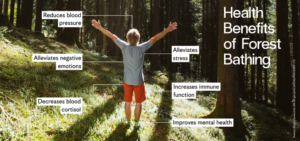
In Japan, strands of historical silviculture and more recent scientific inquiry – along with traditions of painting, poetry, and landscape design – are visible in the modern practice of shinrin-yoku, ‘forest bathing’, whereby walking in natural landscapes is thought to improve health. Today, shinrin-yoku is practised at 52 Forest Therapy Bases, with as many as 100 ultimately envisioned across the archipelago.

In Western media, the practice of shinrin-yoku is either grouped with a suite of alternative and complementary medical practices deemed ‘natural’ (‘The Natural Way to Calm Down’) or inserted awkwardly into a lexicon of conventional health consultation (‘Take Two Hours of Pine Forest and Call Me in the Morning’); but neither characterisation grasps its context accurately.

In the 20th century, Japan’s need for forest products was increasingly (and unsustainably) outsourced to its Asian neighbors and beyond. Efforts to invigorate interest in well-managed native stock led the Forestry and Forest Products Research Institute to conduct research in the late 1970s and 1980s into aromatic compounds called phytoncides, essential oils that are emitted by unvarnished wood. These compounds are produced by live trees as defensive or signalling agents but are also present in resin, and have been associated with improvements to mood, immune function, and blood pressure. Mature aromatic sugi and hinoki forests are among those considered rich in bioactive compounds.

Accessible outdoors

Many of our own cherished childhood memories relate to nature. Building a ‘tree house’, climbing trees, splashing in muddy puddles, fishing with a stick, family picnics – the list is endless. Now societal fears mean children are more often kept indoors, ever-reducing gardens too have become more formal with less play space with the inevitable stifling of the creativity, imagination, stimulation and activity that previous generations enjoyed from natural environments, especially those immediately accessible to the home. Water restrictions in many cities have discouraged gardeners and technological games dominate leisure time.

Our technological age has encouraged sedentary lifestyles at both work and leisure – a particular concern with the younger generation increasingly spending more time indoors, never better expressed than in the title of Richard Louv’s book Last Child in the Woods, Saving Our Children from Nature-Deficit Disorder, in which he quotes a fourth-grader as “I like to play indoors better ‘cause that’s where the electrical outlets are”!


This situation is evolving at the very time that human populations, at least in the West, are increasingly suffering from non-communicable diseases like obesity, mental health problems, breakdowns in community cohesion, and of course the loneliness and boredom triggered by the COVID-19 epidemic. Interestingly, though many playgrounds were at first closed, local parks and open spaces became ‘newly discovered’ for people to unwind from their periods of required isolation and as a break from their ‘working from home’ routines.


It is entirely plausible that, if working from home becomes popular – even for just one day a week – people will spend some of the time that they used to spend in commuting by heading out to a local park, bike way or creekside, or joining locally grounded community groups. The message for urban planners and decision-makers is to ensure that new suburbs are designed to secure generous areas of open space, public parkland and public meeting places, with high-order connectivity to other parks and landscape features nearby.


Review Status: Pending

Green space and public health – (1) A short background

In the beginning …..

The impact of the Industrial Revolution in the early 1800s on both sides of the Atlantic led to increasing urbanisation and a population that began to work indoors, in ‘the dark satanic mills’ of factories, rather than in outdoor active agricultural occupations. It was realised that people needed places to re-create themselves, and so the evolution of parks (and the word ‘recreation’).

When parks were first promoted in the nineteenth century, city officials had a strong belief in the potential health advantages that would result from open space. It was thought that parks would reduce disease, crime and social unrest as well as providing ‘green lungs’ for the city and areas for recreation.

In referring to London in 1829, famous landscape designer J.C. Loudon provided his Hints on Breathing Places for the Metropolis, and for Country Towns and Villages, on Fixed Principles, stating:

We hope that the legislature may not think it unworthy of their attention to take into consideration the subject of breathing places, on some systematic plan, calculated for the benefit of all ranks in all parts of the British metropolis. 

Already at that time, it was also believed that exposure to nature fostered psychological well-being, reduced the stresses associated with urban working and living, and promoted physical health. These assumptions were used as justification for providing parks in cities, and preserving wilderness areas outside of cities for public use in the UK, Europe and USA.

In both England and the USA the focus was on the ability of non-work activity to improve the health, education, social adjustment and life chances of poor people, children, the elderly, handicapped and others who had few resources to replace the outdoor physical activity of agriculture-based peasant life. A less charitable interpretation is that nature-based recreation would shape their mental outlook and improve their character, making them more malleable in their new roles as industrial workers. And so open space was dedicated to provide these opportunities. The human relationship with nature was being recognised as deeply intertwined with both the human conscious and subconscious mind.

Poets and writers captured this (common) sense, like Wordsworth in his 1802 “Daffodils” which concludes with:

I gazed—and gazed—but little thought,

What wealth the show to me had brought:

For oft, when on my couch I lie

In vacant or in pensive mood,

They flash upon that inward eye

Which is the bliss of solitude;

And then my heart with pleasure fills,

And dances with the daffodils.”


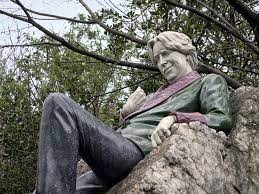
Irish writer and poet Oscar Wilde’s 1897 quotation, inscribed on his memorial statue in Merrion Square, Dublin, Ireland reads: “It seems to me we all look at nature too much and live with her too little.”


The various movements to establish parks centred on shaping urban development, preserving nature and creating opportunities for wholesome recreation, and on using recreation and exposure to nature to promote physical activity, character development, socialisation skills and education. In the UK the Registrar of Births Deaths and Marriages said in his annual report of 1845: “a Park in the East End of London would probably diminish the annual deaths by several thousands …. and add several years to the lives of the entire population”.

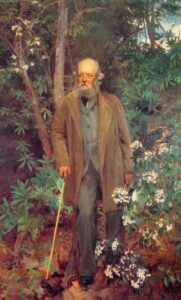
In the mid-1850s Frederick Olmsted championed the cause of city beautification in the USA, including a reference to Central Park in New York as “a healthy refuge from the over-crowded living sections in southern Manhattan”. A colleague referred to Olmsted as “An artist, he paints with lakes and wooded slopes; with lawns and banks.”


In his 1865 The Yosemite Valley and the Mariposa Big Tree: A Preliminary Report Olmsted stated:

If we analyze the operations of scenes of beauty upon the mind, and consider the intimate relation of the mind upon the nervous system and the whole physical economy, the action and reaction which constantly occur between bodily and mental conditions, the reinvigoration which results from such scenes is readily comprehended. . . . The enjoyment of scenery employs the mind without fatigue and yet exercises it; tranquilizes it and yet enlivens it; and thus, through the influence of the mind over the body gives the effect of refreshing rest and reinvigoration to the whole system.

The promoters and champions of the first public parks also saw them as a means to boost the local economy and civic pride by making towns and cities attractive places to work and live. These parks were conceived as special places where all sections of society could enter free of charge and mix freely.

The City of London’s commitment to open spaces dates back to the 1870s when, in response to the rapid disappearance of many public open areas to make way for the building of new suburban homes and other developments (sounds familiar?), it embarked on an ambitious project to safeguard some of what remained. Two Acts of Parliament passed in 1878 granted the City of London the right to acquire and protect both Epping Forest and land within 25 miles of the City for the recreation and enjoyment of the public. This far-sighted policy was the inspiration behind the later Green Belt movement, designed to protect the countryside around other British cities from urban sprawl.

Meanwhile the natural landscapes further afield were similarly being valued. American geologist Ferdinand V. Hayden, while not the only person to have thought of creating a park in the Yellowstone region, was the park’s first and most enthusiastic advocate. He believed in “setting aside the area as a pleasure ground for the benefit and enjoyment of the people”.

John Muir the respected Scottish-American naturalist, today referred to as the ‘Father of the National Parks’, said in 1898: “Thousands of tired, nerve-shaken, over-civilized people are beginning to find out that going to the mountains is going home; that wildness is a necessity; and that mountain parks and reservations are useful not only as fountains of timber and irrigating rivers, but as fountains of life.” 


Even in 1938 UK Professor G.M. Trevelyan wrote in the foreword to the Case for National Parks:

… it is no less essential for any national health scheme to preserve for the nation walking grounds and regions where young and old can enjoy the sight of unspoiled nature. And it is not a question of physical exercise only it is also a question of spiritual exercise and enjoyment. It is a question of spiritual values. Without sight of the beauty of nature the spiritual power of the British people will be atrophied!

Somewhere during the twentieth century, especially as the pace of lifestyle in industrialised Western society increased, that early rationale slowly became forgotten and, although parks have not entirely lost their connection with health, the modern emphasis has been mainly on their use as a venue for physical activity, particularly sport, or as tourism destinations. With increasing urbanisation the vital role that parks, green space and their associated biodiversity (especially in ‘convenient’ urban parks) play in offering health and well-being benefits and enhancing human appreciation becomes even more relevant, just as conserving this precious biodiversity becomes more important.

Meanwhile, in other parts of the world, especially in Asia, the concept of the value of contact with nature for medicinal, cultural and spiritual reasons has been far more ingrained than in Western society. Mystic natural places like mountains are revered for their spiritual powers. Traditional outdoor exercises have been practised for at least 2000 years. Walk through any park in Japan, China, Korea and Thailand and similar countries in the morning and you’ll see people right up to age 80s doing their daily workout of stretching and strengthening together with breathing exercises and acupressure and self-massage techniques of tai chi and yoga. It is in these countries where the benefits of shinrin-yoku (forest bathing) emerged.


Review Status: Pending

Trends in parks and recreation in Australia – as perceived in 1994

This narrative has been edited from a draft written for an international audience in October 1994 by Peter Nicholls, Trustee of the AIPR Trust Fund-Education. Many of the trends are highly operative in the early 2020s.

The impact of change

Alvin Toffler, in his book The Third Wave suggested that the world is going through a “Third Wave” of development. The first wave was the agrarian revolution which took thousands of years, the second wave was the Industrial Revolution, which took about 100 years, and the third wave is a sort of ‘Information Technology’ revolution which is changing the face of the world in just a few short decades. This is creating a huge impact on management in all sectors, including parks and recreation. Not only must managers cope with change but with an accelerating rate of change.

It is in this frame that we need to assess the trends affecting parks and recreation in Australia. Much of Australia’s parks and recreation management is delivered within the public sector and we have to accept that governments have rarely been proactive at dealing with change. This inherent conservatism justifies grave fundamental concern about the future of parks and recreation management in this country (and elsewhere in the world). Governments need to fundamentally review how they can effectively rise to the challenges of a world of rapid change.

An aspect requiring carefully assessment is the role of the private sector in parks and recreation and the scope for increasing public and private sector partnership. I shall discuss this further, later in the narrative.

Major trends

What are the major trends affecting the future of parks and recreation management in Australia? I suggest that they include the following:

  • the substantially reduced availability of funds for public sector activities and the impact which this is having on the need for greater efficiency in the delivery of parks and recreation;
  • a trend towards greater centralisation of control over available government funding;
  • increasing concern about the health of the natural environment; and
  • an expanding role for the private sector in the provision of recreation opportunities, either in its own right or in partnership with the public sector.

Whether these trends will continue relates less to the level of available funding and more to the extent to which these practices meet the challenge of rapid change. We are only now beginning to recognise the enormity of the challenge in coping with changing circumstances (internal and external).

Funding

Although the most recent period of economic recession is now [1994] behind us, it has had a strong influence on funding allocated for parks and recreation. The current trend is to substantially reduce government sector spending, in favour of encouraging free enterprise in the private sector. Whether or not this trend will continue is difficult to say as there is evidence within the currently centrist [Keating Labor] national government (known as the Commonwealth Government of Australia) of a swing back to increased public sector spending. Given that under the Australian Constitution the national government has little direct responsibility for parks and recreation – these being reserved to the states and, by delegation from them, to local governments – this trend is not yet benefiting our profession. Note however my comments later on the greater centralisation in government controls.

The need for visions, missions, goals

The terms in this heading are clichés which have been bandied around by management consultants for a long time. The pity of it is that we have yet to realise how important it is to settle them if we are to progress through this era of rapid change.

Procedures come and go in times of change. The greater hope of stability lies in definitions of what we want to achieve. A simple example (to explain but not to achieve) is a vision of ‘wanting equal opportunities for all people to have access to the recreation opportunities of their choice’. The aim is clear and no amount of rapid change will alter that ideal. What will alter is the procedures and resources for achieving that aim. We need to identify our visions and agree to stick to them. With our visions clear, we can then put change to our advantage in our efforts to achieve our visions.

The future of our heritage

Why speak of heritage in a paper on future trends, particularly a future which is subject to turbulent changes? It is important to remember that our world has been built on our heritage. Whatever the world of the 21st century might produce, to be reminded of the heritage on which it is based will aid stability.

The word ‘heritage’ has some political status in Australia (notably by national and state government in the context of regulatory protection of assets) but the power it wields is more one of accommodating political forces than any real sense of pride in and protection of the physical assets and social influences on which the modern world has been built. Relevant to parks and recreation, there is little doubt that Australia’s international image is built very much on its natural heritage of wild places, beaches, flora and fauna. We speak of world heritage lists of places in Australia – unique natural areas – which need to be protected. Yet we are obliged to continually combat the economic mindset which views all areas as fair game for mining and logging.

Clearly a basic task of the parks and recreation profession is to ensure that all Australians have adequate and accessible opportunities to appreciate their country’s natural heritage. Ecotourism is beginning to be accepted as one of the great ways of attracting tourists to Australia. But also we appreciate the need to preserve those attractions in the face of the disturbance that tourism development brings to those natural areas.

On the urban and near-urban scene, one positive trend is the increasing awareness of the need to preserve creeks, rivers and streams as greenways. People are keen to see linear parks and nature corridors, either just to allow them to enjoy nature or as a means of travelling from one place to another (e.g. from home to the shops or school). Walkways, cycleways and (rural) horseriding paths are booming and it is likely that this trend will continue.

National programs

As mentioned earlier, there is little national political interest in parks and recreation other than during periodic controversies about the effects of particular development proposals on the natural environment; and periodic complaints by the environmental movement about underfunding of park management.

The fact is that the professional interests of parks and recreation managers and those of the national politicians are still far apart. However, if and when our national government decides to take seriously the fact that we are heading for an environmental disaster, their interests and those of parks and recreation management are much more likely to converge.

Centralisation

There is in Australia a trend towards greater centralisation of control over public funding. The national government has been the sole collector of income tax in Australia since the Second World War. Traditionally the national government has given large untied grants to state and local governments. In recent years such funds have been greatly reduced and that which is granted is increasingly subjected to conditions of use – ‘tied grants’. [The introduction of a goods and services tax in 2000 significantly increased the flow-on payments to states, but the author’s point about predilection for tied grants remains valid].

Given that the national government has little responsibility for parks and recreation issues (except in the Territories), this trend to greater fiscal centralisation is likely to increasingly add to the woes of parks and recreation professionals at the state and local government level as they seek to gain the funds vital to the needs of their work.

The Role of The Private Sector

The era of ‘economic rationalism’ [Australian term for neoliberal economic policy, dating from 1983] has brought extensive outsourcing of parks and recreation operations, but less thoughtful attention to how private enterprise and the visions of the parks and recreation professional can mutually benefit. There is an inherent tension between the need for private firms to extract a short-term profit and the long-term ideals of the public sector, which chronically lacks the resources needed to bring those ideals to reality. Successful mutual partnerships are known. The professional associations offer a major avenue for strengthening these partnerships.

In local government, where the bulk of public sector expenditure on parks and recreation occurs, the contemporary squeeze on public funding is resulting in a growth of the practice of compulsory competitive tendering for parks and recreation services. It is interesting to hear that while this practice is now well-established in Great Britain, there is growing evidence that it is not working and the policy pendulum may swing back (but to what?).

Already widespread in Australia is the practice of contracting services out to private firms, both in maintaining parks and gardens and in the management of recreation facilities. Contracting out saves the council much in the highly expensive areas of staffing and capital machinery. Indeed, there are examples in private enterprise where the major part of the work has been contracted out, leaving only those people who have the expertise which is unique to the organisation.

The management of leisure centres (wet and dry) is heavily swinging towards the private sector as councils see the benefits of being seen to provide a service to the community at a much reduced cost to the ratepayer. The community is generally accepting except there are those who are still concerned that social justice principles may be ignored in favour of the user-pays principles. Rather than talking of ‘user pays’, we need to be asking ‘who pays?’ This line of questioning opens all the options available along the continuum from total funding through rates and taxes (rare these days) to various proportions of public and private sharing of the costs (of which the user is only one of many possible funding sources).

Parks and recreation organisations In Australia

There is a need for a new form of communication between politicians and parks and recreation professionals and for improved decision-making procedures which are more responsive to the issues which are rapidly emerging in the field.

At present a plethora of professional associations cover the provision and maintenance of parks and recreation assets and services. None can claim to be influential in the affairs of public administration. These associations should consider consolidation as they face the challenge of remaining viable while having a small member base in contrast to the sophisticated mass marketing of private enterprise upon which these organisations depend for sponsorship.

The Royal Australian Institute of Parks and Recreation took the lead and set up a process through which the many related associations in Australia could meet and discuss the potential mutual benefits of establishing a new major organisation along the lines of the British Institute of Leisure and Amenity Management and the American National Recreation and Parks Association.

The new organisation Parks and Leisure Australia has the potential to influence the above-mentioned trends – reduced public sector funding, expanding role of parks and recreation in improving the health of the natural environment, and strengthening the links between the public and private sectors.

Conclusion

It seems that pendulums of societal change are swinging ever more rapidly. Professionals and practitioners in the parks and recreation sector need a clear understanding of the visions they should be pursuing and be prepared to effectively use whatever trends present themselves in the cause of turning those visions into reality.

Review Status: Pending

A Short History of the AIPR Trust Fund-Education

When the Australian Institute of Parks and Recreation (predecessor to Parks and Leisure Australia) established a Trust Fund – Education on 8 February 1974, it had no particular project in mind, but a general desire that the Institute should make a long-term investment in the future of the parks and recreation professions.

Continue Reading

Review Status:

History of parks and recreation in Australia

This narrative has been lightly edited from a draft written in 1994 by the late Frank Keenan, a co-Founder of the AIPR Trust Fund-Education. It has aged well.

Introduction

Initial development of the parks and gardens of Australia and the recreation movement was dominated by two major influences. Firstly the British heritage of the original settlers led to the desire that the new colonies would contain those elements of their home country which they most cherished. Prominent among these was their gardens, both private and public, which were the result of the interest in horticulture at all levels of government and the society generally. Thus Australia inherited the skills of the excellently-trained horticultural artisans and garden planners in the same manner as the other British colonies in the seventeenth, eighteenth and nineteenth centuries. So the traditional English landscape including its associated plant species became an integral part of the towns and cities. The environment of the urban areas of Australia has been widely characterised by the contrast between the surrounding countryside and the parks, gardens and street trees of the towns and cities.

Secondly has been the development of recreation. Unlike horticulture, in which the government and community bodies set aside land for public parks and gardens, assisted in the development of these areas and helped finance the procurement of plants, the recreation groups were established by voluntary workers from within the community. In the early years the government assistance was limited to actions ensuring the survival of the colony. Then followed the development of the essential services for community life. Consequently, people themselves using the pioneering spirit common to the early settlers established their own leisure activities, using land, water and any other resources that were available.


Evolution of horticultural styles

With few exceptions the native flora is evergreen with a high percentage of eucalyptus and offering a landscape completely different from that introduced by the British colonists. The first towns of Sydney and Hobart were developed as penal settlements and since their administrators came from military and seafaring backgrounds, they had little knowledge of conservation and horticulture and it was not until the arrival of the first settlers that there was any substantial movement in establishing parks and gardens. Thus as the early surveyors developed the town plans, areas were set aside for public open space and the new settlers began building their new environment using the ingredients dear to their heart. Thus, today in our earliest-developed localities, the prevailing trees are deciduous types which, with the aid of irrigation and the absence of natural predators, have flourished. However by the beginning of the second half of the 20th century many changes to this pattern had evolved. Australians have now begun to understand and treasure their indigenous plants resulting in firstly, conservation measures being taken to ensure the protection of native flora and secondly, the use of these native plants as part of their horticultural planning in new developments. This philosophy is now being put into practice by the introduction of tertiary education in such fields as town planning and landscape architecture, together with Australia-wide training in associated crafts such as apprenticeship schemes.


Recreation

The development of people’s leisure time activities in the early years was entirely dependent on their own motivation. Those open spaces being provided by government were preserved for environmental and aesthetic purposes with recreation limited to such things as walking, socialising over refreshments in the tea house and listening to the local brass band. All forms of sporting activity were forbidden in such places. Thus as the colonists formed their sporting groups and similar leisure-time community organisations, they either used private land and buildings or lobbied the government, including local authorities, for permission to reserve Crown land for community purposes. It was not until the early twentieth century that financial assistance began to be made available to assist in the development of playing fields and associated buildings. Because these recreation grounds were developed by sporting administrators with little knowledge of landscape design, and without finance to seek outside assistance, these sporting areas contributed little to the community environment. It is only from about the late 1960s that planning controls have been exercised and sports fields have become elements of town plans, complete with landscaping standards and maintenance programs.

The work of organising these sporting groups was performed by members of the public in their own time and at their own expense. This pattern of volunteer organisation in all forms of sport involving every age group has now developed with possibly the leading example of volunteer community action in the western world. As the facilities became more sophisticated and sporting bodies more competitive, the spirit of the original pioneers became the driving force that propelled Australia into world prominence in sporting spheres. Again this movement has been greatly assisted by the accepted practice by which leading sportsmen and women, after standing down from active participation, returned to their clubs as coaches and administrators, thus providing a role model for the younger generation to follow and to ensure that national standards were maintained.

In those cultural fields associated with community leisure, the pattern of volunteers ‘participation was similar to those of sporting activities. However the heritage of the early British settlers ensured that their traditions were followed: a new land with more affluent residents becoming financial patrons of the arts. With this background, successful organisations were established in both the performing and the graphic arts. However as in other western societies, higher taxation on private families saw bodies struggling to exist and in 1968, the federal government established the Australian Council for the Arts. This meant that for the first time in the country, government accepted the responsibility of organising and heavily subsidising the arts movement. These actions also ensured that the artists themselves were given every opportunity of earning a reasonable salary including their employment as teachers and coaches.


Parks management

In the latter part of the twentieth century, the management of parks and recreation systems has undergone considerable changes. Traditionally the administration of urban public open spaces has been vested in local government. The greater proportion of this land is publicly owned, classified as Crown land with the ultimate control of its use resting with the appropriate state government minister. The local council is commonly nominated as the trustee to manage the land; however in specific cases independent trusts who bypass the council but are still responsible to the minister have been established.

Until recently councils were comparatively small structures with the Town Clerk or the Chief Executive Officer being the General Manager and the City Engineer being responsible for the outdoor activities. This work covered the parks, gardens and open spaces and to assist him the council employed a superintendent of parks and gardens, who performed the role of the city gardener under the British concept of that period. It was only in the state capital cities that the parks departments were operated as autonomous bodies with the chief officer answerable to the council.

Today [~1994] these routines are in the process of change. In several states, including those of the eastern seaboard in which the greater proportion of the population resides, local government is being reorganised. The smaller councils in New South Wales have been amalgamated into much larger bodies and in Victoria a similar exercise is taking place. These moves will have obvious effects on parks and gardens management and staffing arrangements.

Two other changes in the higher echelon of council employment are also having an influence in this field. Firstly is the emergence of the town planner as a major force in the development of new areas and reconstruction of the older cities. This person is now taking over the planning of the open spaces and employing landscape architects, formerly working with the parks and gardens sections. Likewise has been the emergence of the municipal recreation officer. This particular move has seen a change in the city gardener philosophy with a parks and gardens responsibility being limited to maintenance. Today the Australian tradition of reliance of volunteers in organising its leisure activities is now being boosted by the employment of professionally trained staff.

Another change affecting local government is the move to privatise the staff in the construction and maintenance of parks and gardens. Currently [1994] council officers are undergoing educational training to ensure that new policy can be effectively implemented.

Other forms of open space used for specific purposes including zoological gardens, foreshores and cemeteries are not usually operated by councils. As these community facilities were developed in the pioneering days when local government was in its infancy, state governments accepted the responsibility and commonly established independent trusts consisting of leading members of the community, together with those having the necessary professional and technical skills. Such bodies were directly responsible to the minister and many are still in existence today.

There is also a limited number of privately-owned parks, notably golf courses, racing tracks and sports stadiums, usually managed by private recreation clubs. In the main, these bodies have purchased their own land, although in a number of instances Crown land has been made available under controlled conditions.

Finally, in the latter part of the twentieth century, there has been a marked increase in tourist resorts ranging from those centred around the sea and sunshine, to specific theme parks and those built around recreation features with the emphasis on golf courses, many of which are of international championship standard. There is little doubt that these type of recreation facilities will increase as the tourist industry in Australia increases in order to meet the demands of the nearby Asian countries, Japan in particular.


Role of the Royal Australian Institute of Parks and Recreation (now Parks and Leisure Australia)

The original moves to co-ordinate the horticultural industry in Australia date from the early days of colonisation. It was then that the first horticultural societies were formed, but it was not until 1926 that the managers of public open spaces met to establish their own group. This new body originally named the Victorian Tree Planters Association, was to set up in that State, its foundation members being a mix of politicians, nurseryman and curators of parks, gardens and street plantations. The Association became the Victorian Institute of Parks Administration in 1955. In 1962 it expanded nationally as the Australian Institute of Park Administration, and in 1965, it was reconstituted to become the Australian Institute of Parks and Recreation. In 1977 it was granted the royal charter to become the Royal Australian Institute of Parks and Recreation (RAIPR).

During the latter part of the nineteenth century the planning concept of the ‘garden city’ was introduced to Australia after successful ventures in the United Kingdom. A suburb of Melbourne developed according to garden city principles between 1926 and 1948 still carries that name. Town planners adapted to this movement by specifying the quarter-acre allotment for each individual home and the average Australian used most of this land to develop the house garden. Thus the urban areas of residential use virtually became one large garden in which houses were erected, and the effect has been very satisfactory, particularly amongst the more prosperous and house-proud residents. Thus it was not surprising that in 1975 the State Government promoted Victoria as the Garden State and appointed a Garden State Committee as an advisory body to ensure the development of this character. The most tangible evidence of this action was the words on all motor vehicles registration plates, Victoria Garden State.

In all of these initiatives the Institute has been involved. In its early years, it led by example in organising tree planting schemes bordering major highways, and arboreta in which to conduct tree trials. Further, its annual conferences have had a major influence in the interaction between politicians and park managers.

The Institute was the first group in the nation to recognise the public recreation movement, in 1965, at least six years before all levels of government introduced ministries and departments of recreation and leisure activities. It modified its constitution and changed its name. As such it ensured compatibility between the old and its new disciples operating in the same field, and was well equipped to be represented in those advisory bodies established by both the federal Government and the state authorities.


Review Status: Pending

Glen Rock Master Plan

When staff of the Land Planning Branch of the Department of Lands, managers of the Regional Open Space System from its commencement in 1994, recommended that the Glen Rock property in the Gatton hinterland be purchased for public purposes, the intended purpose was as a demonstration cattle property. Given its proximity to the metropolis, the range of vegetation types from Creek Flats to mountaintops and the sensitivity of the land to soil erosion, it was considered that it would make an excellent facility to showcase landcare principles and practice. This was consistent with development as a regional park. Continue Reading

Review Status: Pending